
How Big Should Your Dog Portrait Actually Be? A Simple Guide to Sizing Wall Art
You finally did it. You have the portrait. The one that stops you cold every time you walk past it. Now comes the question that trips almost everyone up: what size do I order, and where does it go?
Sizing wall art is one of those things that feels complicated but isn't — once you know a few simple rules. And getting it right matters. The wrong size can make even a beautiful image feel like an afterthought. The right size makes it feel like it was always supposed to be there.
Here's what you need to know.
The Rule That Covers Almost Everything
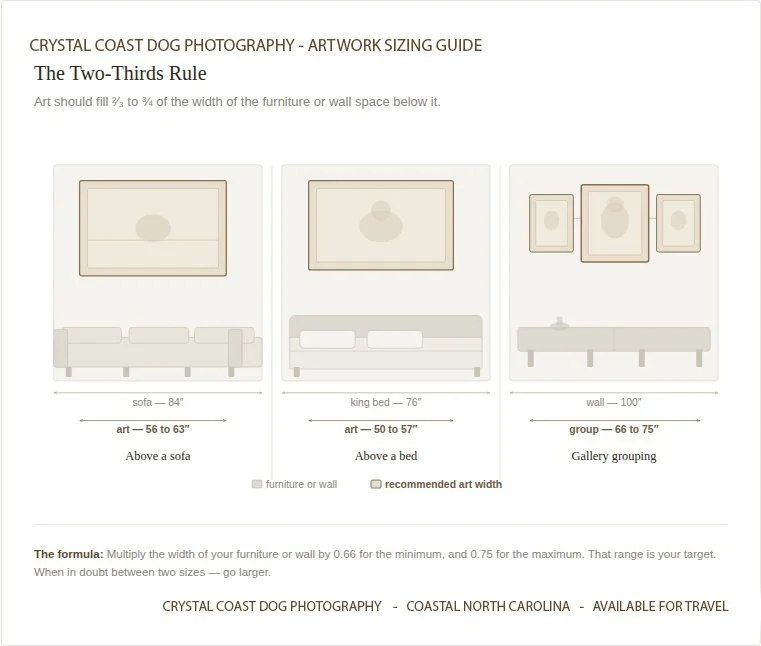
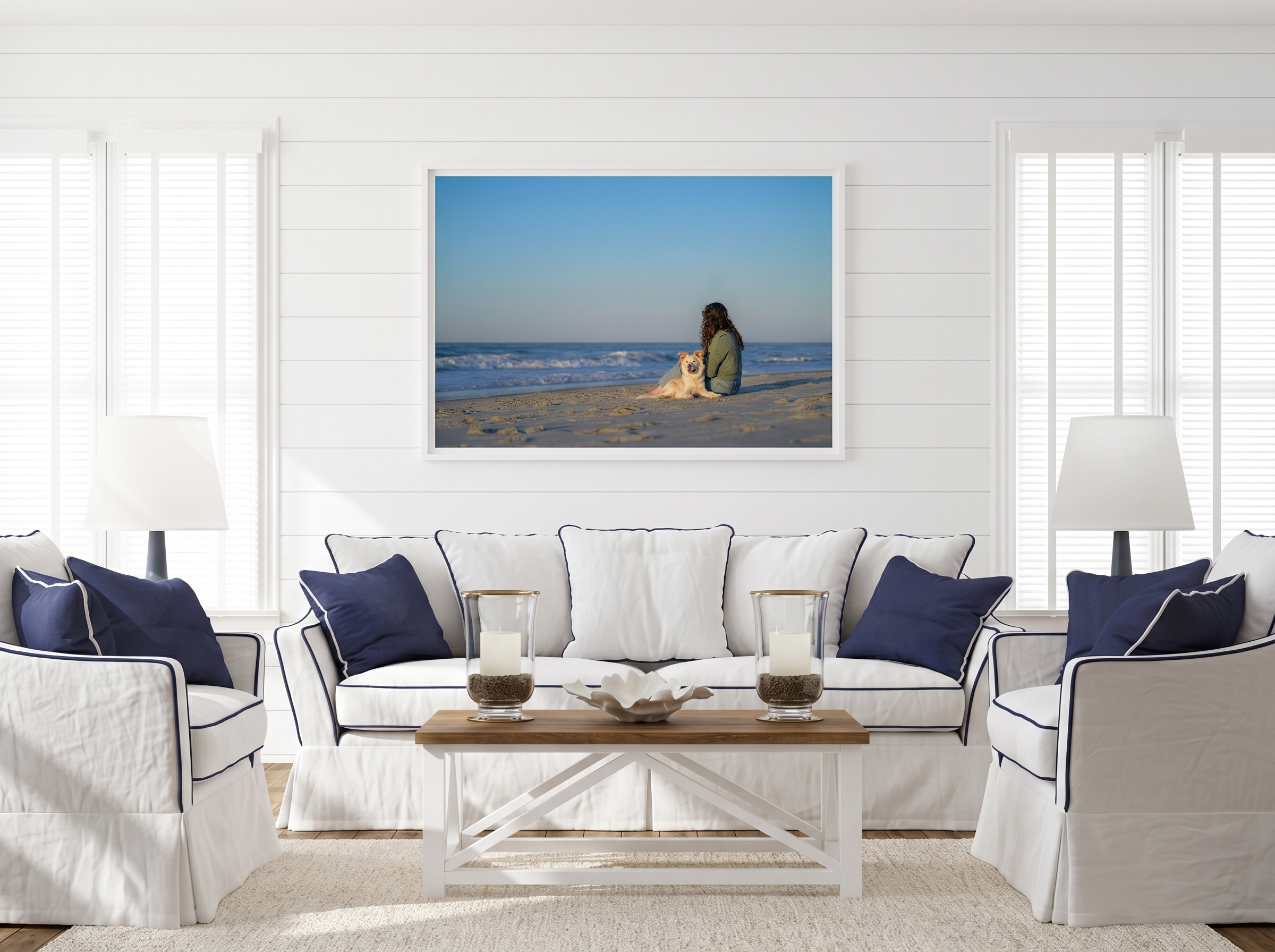
Whether you're hanging art above a sofa, a bed, a console table, or an empty wall, the guideline is the same: your artwork should fill about two-thirds to three-quarters of the width of the space or furniture it lives above.
So if your sofa is 84 inches wide, you're looking for art — or a grouping of art — that lands somewhere between 56 and 63 inches wide total. One large statement piece, or several smaller pieces that add up to that range.
If you're working with a king-size bed (standard 76 inches wide), you'd want art between 50 and 57 inches wide. For a queen (60 inches), somewhere in the 40–45 inch range.
The math is simple:
Wall or furniture width × 0.66 = minimum width Wall or furniture width × 0.75 = maximum width
Run that calculation once and you have a clear target.
Try It Before You Commit
Not sure how a size will actually feel on your wall? That's exactly why I built the Artwork Size Visualizer — so you can see how different print sizes look in a real room before you decide. Plug in your wall dimensions and watch the pieces scale. It takes the guesswork out.
How High to Hang It
The standard recommendation: hang art so the midpoint of the piece sits 57–60 inches from the floor. This is roughly average eye level and the number interior designers and framers come back to consistently.
If the art is hanging above furniture, the bottom of the frame should sit about 8–10 inches above the top of the piece it's over. This creates visual connection between the furniture and the art — they feel like they belong together instead of floating in two separate zones.
One practical note: before you hang anything above a sofa, sit down and lean your head back. Mark where it lands. Your art should clear that point. No one wants to tap the back of their head on a frame.
What About Gallery Walls and Multiple Pieces?
Sometimes one image isn't the whole story. And honestly, for the clients who have watched multiple dogs through different seasons of life, a gallery wall can become something more than decoration — it becomes a record.
When you're grouping pieces, the same two-thirds rule still applies to the total width of the arrangement. Space individual frames 2–3 inches apart for smaller work, up to 6 inches for larger pieces. The grouping should feel like it belongs together, not like it wandered in from different rooms.
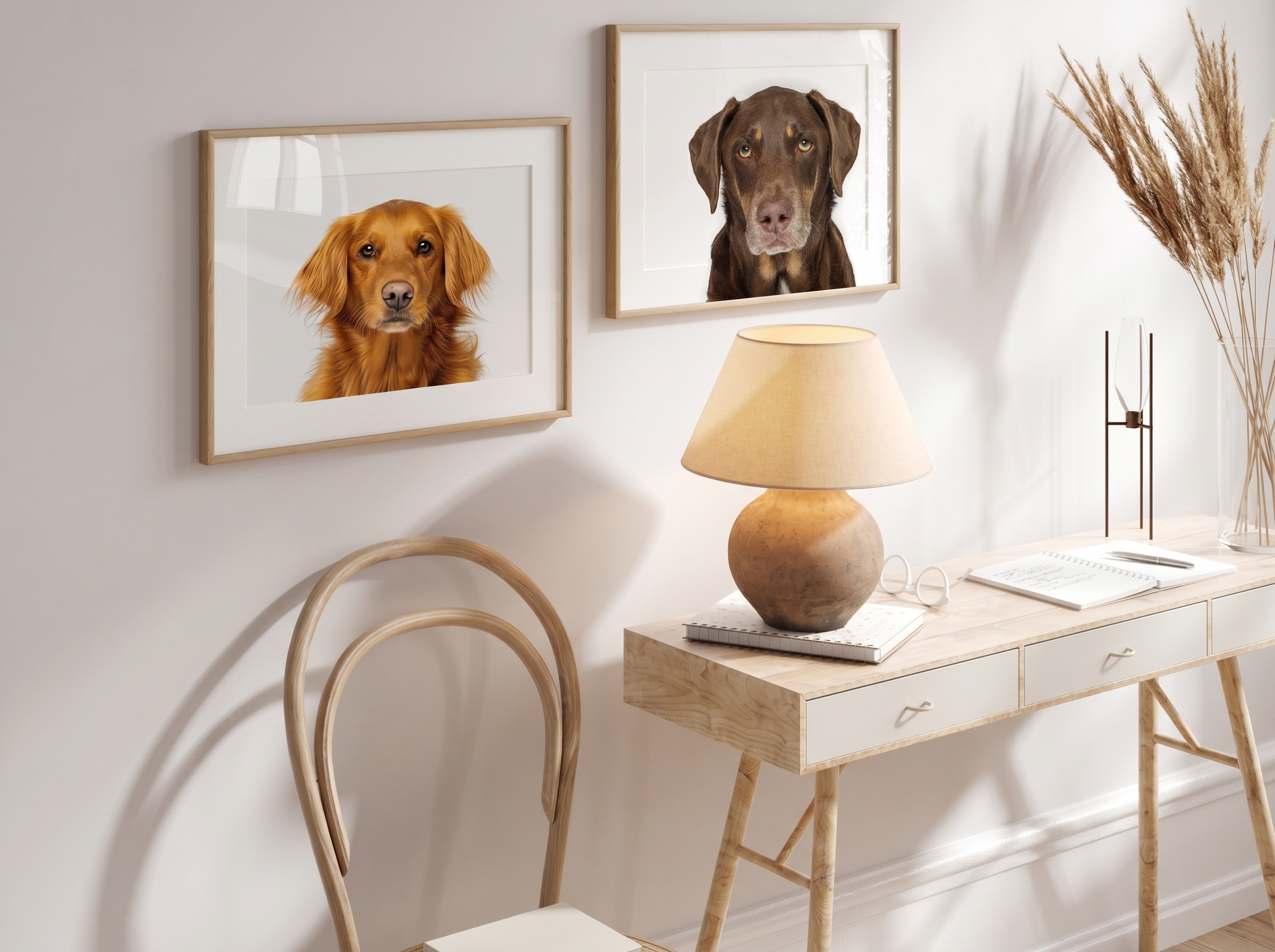
Two portraits, same frame style, consistent spacing. Simple, clean, and the dogs are clearly the point.
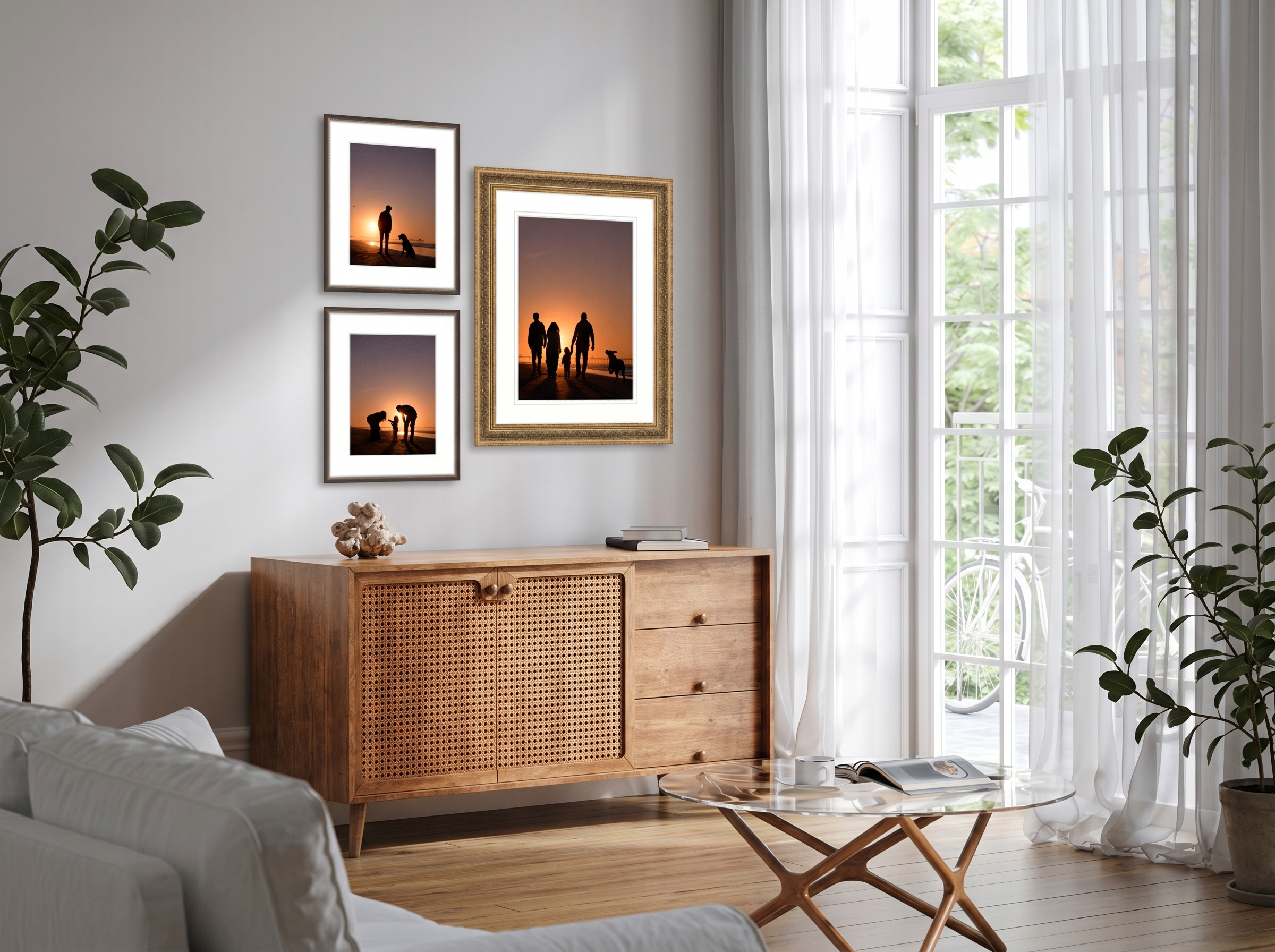
This arrangement pairs two smaller vertical pieces with one larger statement frame — different sizes, same emotional thread running through all three. The asymmetry works because the images belong together.
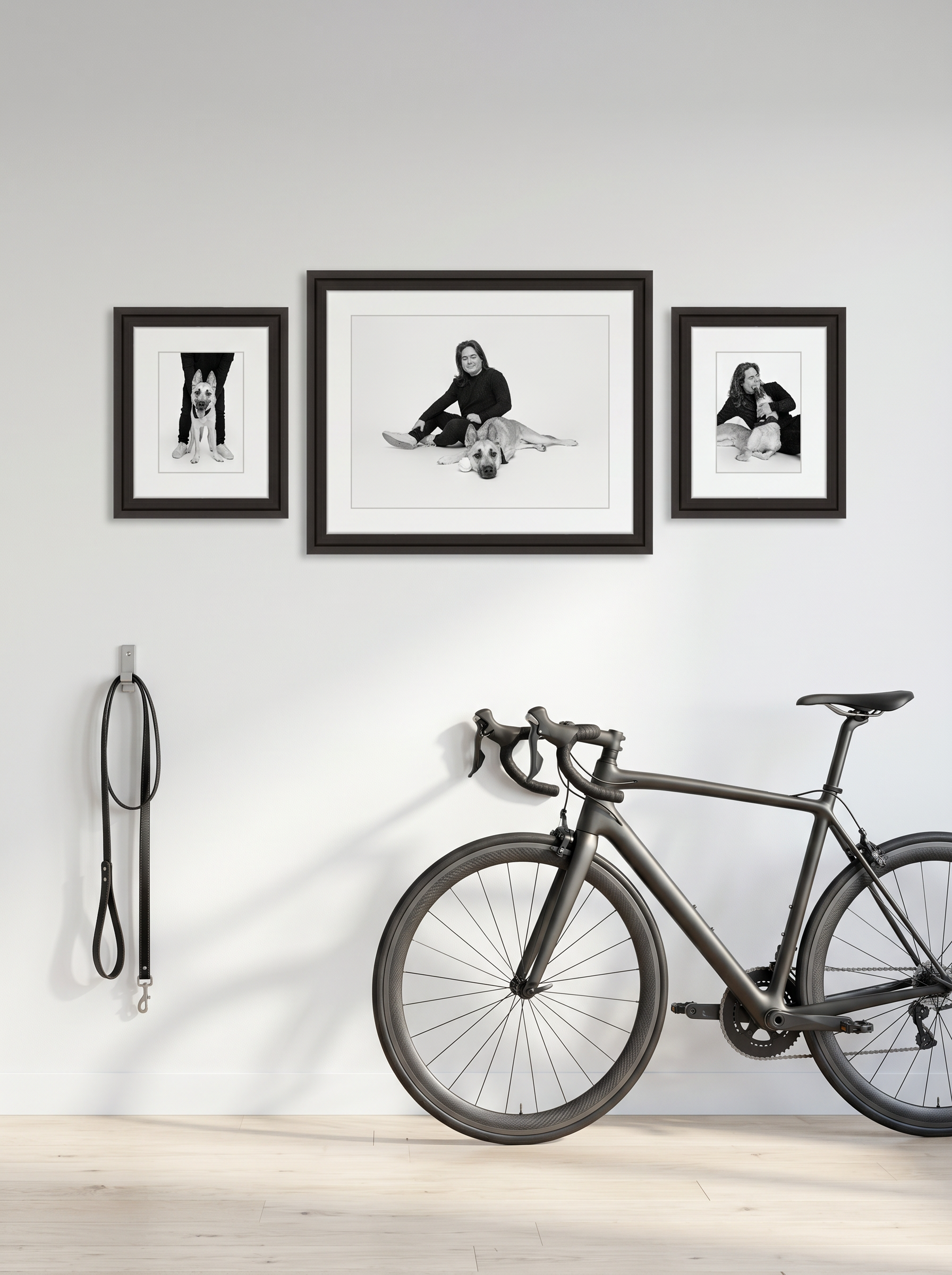
A triptych doesn't have to live in a living room. This hallway arrangement works because the frames match and the images share a visual language — black and white, consistent style, graduated sizes anchored by the center piece. The leash on the wall doesn't hurt either.
When It Comes to Heirloom Portraits, Go Bigger Than You Think
Here's something I've seen play out in nearly every reveal: clients almost always wish they had gone larger.
A portrait that feels bold in a size guide feels right on an actual wall. The image you've been putting off for years, the one that captures something true about your dog and your relationship — it deserves to be seen. Not tucked into a corner, not politely sized to blend in. Present.
If you're on the fence between two sizes, go with the larger one.
FAQ: Sizing Dog Portrait Wall Art
Crystal Coast Dog Photography — Artwork Planning Tool
Wall Art Sizing Calculator
Find the ideal art width for your space in seconds. Select a common furniture size or drag the slider to enter your own measurement.
Common spaces
art width
art width
art width
Proportional preview
Want to see how it looks on your actual wall? Use the Artwork Size Visualizer →
Crystal Coast Dog PhotographyWhat size portrait should go above a sofa? Use the two-thirds rule: your art (or total grouping) should span two-thirds to three-quarters of the sofa's width. For a standard 84-inch sofa, that's 56–63 inches wide. One large horizontal piece or a curated grouping both work.
What size portrait should hang above a bed? For a king bed (76 inches wide), aim for art that's 50–57 inches wide. For a queen (60 inches), 40–45 inches. A single large horizontal piece works beautifully here, or two vertical pieces hung with a small gap between them.
How high should you hang a dog portrait? The standard is to hang art so the midpoint sits 57–60 inches from the floor. If the piece is above furniture, the bottom of the frame should clear the top of the furniture by about 8–10 inches.
Can a dog portrait be too large for the wall? Rarely. Most people err in the other direction — going smaller than the space can hold. The portrait should feel present, not apologetic. The one exception: leave a few inches of breathing room at the edges so the image isn't squeezed against adjacent walls or trim.
What's the best way to figure out sizing before I order? Use the Artwork Size Visualizer. Enter your wall dimensions and see how different sizes actually scale in the space. It's free to use and takes about two minutes.
Do mats and frames change the size I should order? Yes — always factor in the framed dimensions, not just the print size. Mats and frames add to the final footprint, sometimes significantly. Confirm the full framed dimensions before finalizing placement.
The Last Thing
Art sizing has guidelines, not rules. These numbers give you a place to start — a framework that prevents the most common mistakes. But at the end of the day, it's your home and your dog, and the goal is to hang something that makes you feel something every time you walk into the room.
That's what we're really after.
If you're working through artwork decisions from your Crystal Coast Dog Photography session, or if you're still thinking about booking one, I'd love to help you think through placement. Reach out anytime — I'm happy to talk through sizing, wall space, and what might work best for your home.
Crystal Coast Dog Photography serves clients across Carteret County, coastal North Carolina, and the Carolinas, and is available for travel.